
Drain Cleaning
The first clue is usually the sound: a gurgle from the tub when the washing machine drains, or a toilet that bubbles when someone runs the kitchen sink. Drains tell you a lot before they stop completely, and listening to them is the cheapest diagnosis there is. What follows is a plain guide to the clogs Montgomery homes get, the tools plumbers use on them, and how to tell a one-time clog from a line that needs a closer look.
Montgomery Plumbing Pros connects homeowners with independent local plumbers. We do not run drain machines ourselves; we read your request and put you in touch with a plumber who does this work every week.
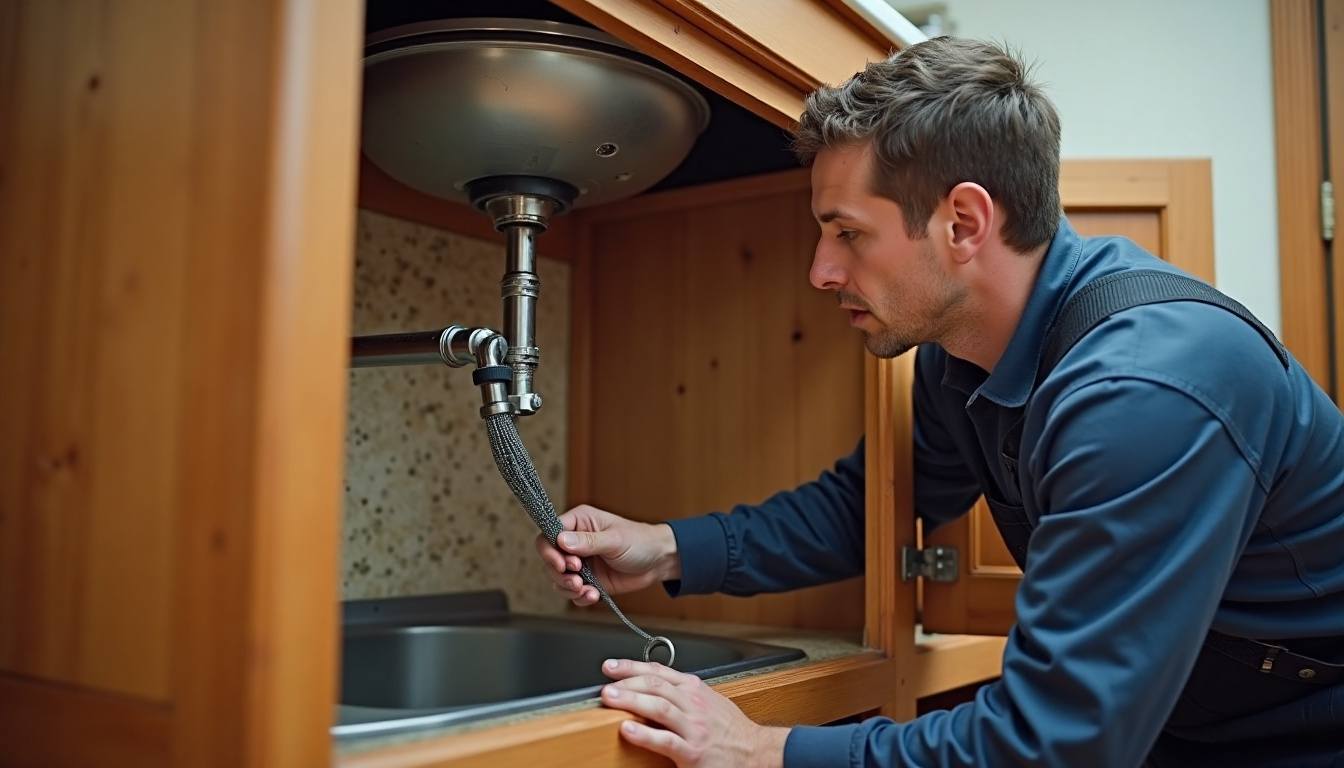
One fixture or the whole house?
If only one sink or tub is slow, the clog is almost always in that fixture's branch line: hair in a bathroom drain, soap and grease in a kitchen line. If several fixtures are slow at once, or a drain backs up when a different fixture runs, the problem is further down, in the main drain or the sewer lateral that carries everything out to the street. A clue that points to the main: water rising in the tub or shower when the toilet flushes.
That difference matters for the quote. A branch clog is a short job through the fixture or a nearby cleanout. A main line clog means working from the outside cleanout or pulling a toilet, and longer cable or a jetter.
Kitchen grease and disposal clogs
Kitchen drains clog the slow way. Grease goes down warm and liquid, cools in the pipe, and catches food scraps and coffee grounds until the opening is the width of a pencil. A garbage disposal does not change that; it grinds food smaller, but the pieces still have to travel the same line. Rice, pasta, potato peels and eggshells are the usual culprits.
Pouring boiling water or a chemical opener down a slow kitchen drain may buy a few days. Caustic openers can also damage old pipe and make the plumber's job harder, so say so if you have already used one. A plumber will usually run a cable through the line and, if grease has built up along a long run, suggest jetting to scour the walls clean.
Roots and scale in older lines
In Old Cloverdale, the Garden District and other neighborhoods with houses from the 1940s and earlier, the drain lines under the house are often cast iron and the lateral out to the street may be clay pipe. Cast iron rusts and scales on the inside, and the rough crust snags paper and grease. Clay pipe comes in short sections, and tree roots find their way into the joints, especially when the soil dries out and roots go looking for water.
A cable with a cutting head can chew through roots and restore flow, but roots grow back through the same joints. If a line has been cleared for roots more than once, a camera inspection is the next step, and you can read about what a camera finds in the main line and the repair choices that follow.
Snaking vs. hydro jetting
A drain cable, or snake, is a spinning steel cable fed into the line with a head that breaks up or hooks the clog. It is the right tool for most single clogs and is quick to set up. Hydro jetting sends water at high pressure through a hose with a nozzle that sprays backward, scouring grease, scale and fine roots off the pipe walls and flushing them out.
Jetting does a more thorough job on a line packed with grease or scale, but it is not right for every pipe. Old cast iron that has thinned or clay pipe with a broken section can be damaged by high pressure, which is why a careful plumber runs a camera first on an older line before jetting it. Ask which tool they plan to use and why.
Camera inspection after a repeat clog
If the same drain clogs every few months, there is a reason, and the camera is how you find it. A small waterproof camera on a push cable goes down the line and shows what is in there: roots at a joint, a belly where the pipe has sagged and holds water, a crushed section, an offset joint, or heavy scale in cast iron. Many plumbers record the footage and can tell you roughly where and how deep the problem sits.
Sometimes the answer is less dramatic. A toilet that clogs over and over may just have a worn flapper or a low-flow bowl that struggles, which is closer to worn fixture parts and tired tanks than to a sewer problem. Homeowners in Millbrook and the towns nearby bring the same questions.
How drain work is priced
Plumbers price drain clearing in different ways. Some charge a set rate for a fixture drain and a higher rate for a main line from an outside cleanout. Others charge by time. Jetting and camera work are usually priced separately from a basic cable. Access changes the price too: a house with a clean outside cleanout is quicker than one where the plumber has to pull a toilet or go through a roof vent. Ask for that price on paper before the cable goes in, and make sure it names the drain being cleared. If the camera turns up a broken pipe, ask for the repair to be quoted as its own line, so you can decide on it separately.
Get the drain looked at
Tell us which drains are slow, whether it is one fixture or several, and how old the house is, then send the form. If the tub fills with dirty water when the toilet flushes, say so; that points to the main line rather than a single drain. We connect you with an independent local plumber who handles drain work, and you can check their license and insurance before they start.