
Gas Line Repair and Installation
If you smell gas, leave the house and call the gas company or 911 from outside. Do not wait on a form or send one first; a request here is not how a gas leak gets handled, and nothing on this page is meant for that moment. Get everyone out, leave the door open behind you, and do not try to find the source. Do not flip light switches, use the garage door opener or start a car in an attached garage. Your gas company's emergency line is printed on your bill.
Natural gas has no smell of its own. Utilities add a chemical that smells like rotten eggs so a leak is noticeable, which is why any whiff of it indoors deserves that call. Only after the utility has made the area safe does a plumber come in. If the leak is on the house side of the meter, the utility may shut off service until a licensed gas fitter repairs the line and it passes a test.
Beyond the gas smell
That is the urgent part. The rest of this page covers the everyday side of gas piping: repairs, new lines for appliances, testing and permits, and how to check that the person doing the work is licensed. Montgomery Plumbing Pros is a referral service. We connect you with an independent local plumber or gas fitter; we do not do gas work ourselves.
Common gas line jobs
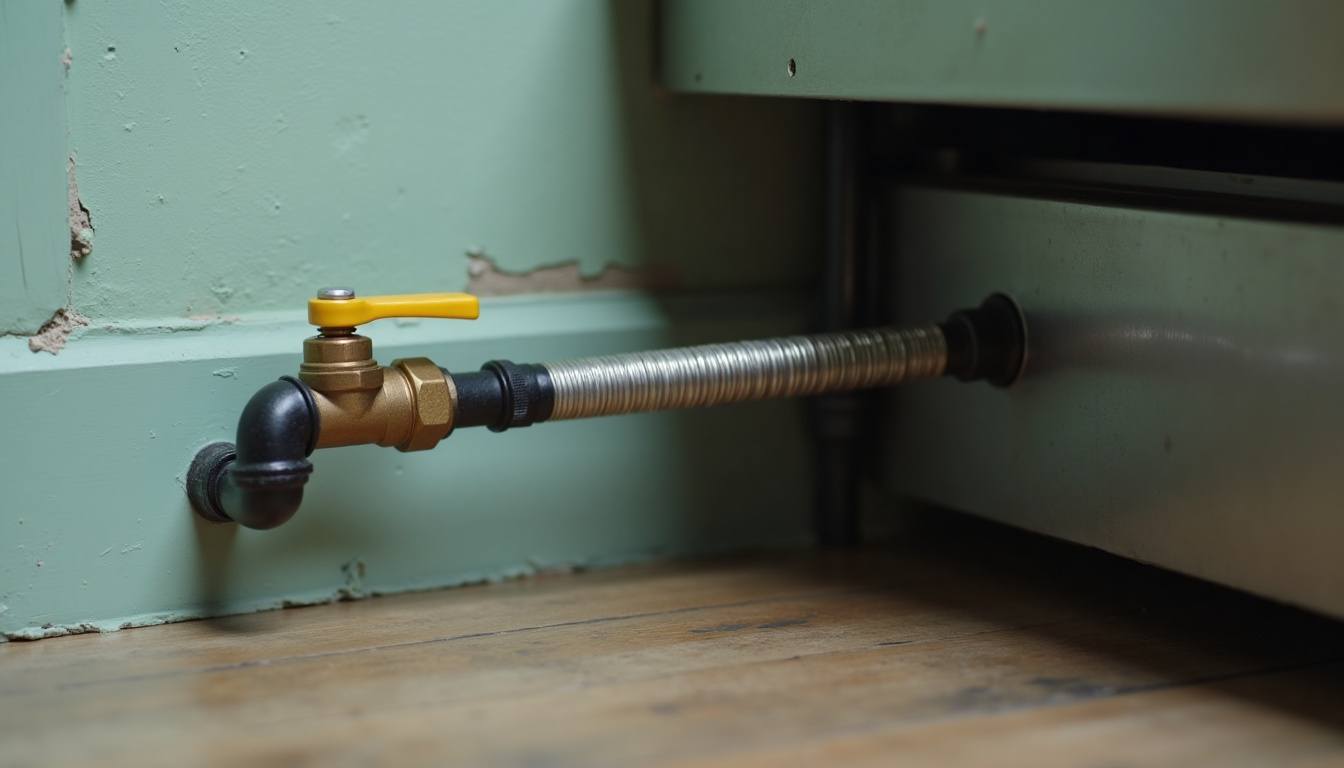
Most gas work in homes falls into a few categories. Repairing a leak found by the utility or during an appliance install, often at an old fitting, valve or corroded section. Replacing old flexible appliance connectors, especially older uncoated brass connectors, which are no longer considered safe. Adding a shutoff valve where an appliance does not have one. Upsizing a line that cannot supply a new, larger appliance. And running new lines to the yard for a grill, fire pit or pool heater.
Gas piping in homes is usually black iron pipe or corrugated stainless steel tubing, called CSST, which is flexible and yellow-jacketed. CSST needs to be bonded to the electrical grounding system according to the manufacturer and code, and a good fitter will check that.
The piping on your side of the meter is generally the homeowner's to maintain, including any buried line running out to a detached garage, shop, pool heater or outdoor kitchen. Those yard lines are easy to forget until something goes wrong. Signs worth a call: a hissing sound near the line, a strip of dead or yellowed grass in an otherwise healthy lawn, bubbles in a puddle over the pipe route, or a gas bill that climbs with no new appliance. Older buried steel lines can corrode where the coating has worn, and a fitter can pressure test a yard line on its own to see whether it holds.
Appliance hookups
A new gas range or dryer often needs only a new connector and a leak test, if the existing line and shutoff are in good shape. Switching from electric to gas is bigger. It means running a line from the nearest supply pipe, which may need to be sized up to handle the extra load, plus venting for a dryer. Water heaters are a common reason to call: swapping a gas water heater means disconnecting the old one, checking the shutoff and connector, and making sure the vent is right.
A standby generator needs a dedicated line sized for its demand, and sometimes a larger gas meter, which is the utility's call. Ask the fitter whether the meter can handle the load before the generator is bought. In rural areas, homes may run on propane from a tank, and the propane supplier's rules come into play; the page on rural lots near Deatsville covers that side of things.
Pressure testing and permits
After new gas piping goes in, or after a significant repair, the line is pressure tested: capped, filled with air at a set pressure, and watched on a gauge for a period of time to make sure it holds. Many jurisdictions require a permit and inspection for new gas lines, and the utility may require proof before turning gas on. Ask whether the quote includes the permit, the test, and relighting appliances afterward. Plan for the gas to be off for part of the day while the work and test are done, which means no hot water from a gas heater and no cooking on a gas range until the fitter relights everything and checks each burner.
Some gas leaks are tiny and only show up when a fitter puts a leak detector or soapy water on the fittings during an install or repair. A smell is a different matter: even a faint one near an appliance, even now and then, is a reason to step outside and call the gas company, not to wait and see. If water is also involved, for example a leaking water heater with a gas burner, the steps for a water emergency still apply.
Checking a gas fitter's license
In Alabama, the Plumbers and Gas Fitters Examining Board licenses people who do this work. Its website has a licensee search for individuals and businesses, along with a way to file a complaint about an unlicensed contractor. Before anyone works on your gas piping, look up the person and the company. It takes a couple of minutes and is the single best check you can make. Once the license checks out, get the full price on paper. Ask for the quote to list the testing and any permit as separate lines.
Get a gas line quote
For planned gas work, tell us what you need, whether it is a repair the utility has already flagged and made safe or a line for a new appliance, and send the form. If you smell gas right now, do not send this form: leave the house and call the gas company or 911 from outside. We connect you with an independent local plumber or gas fitter.